.png)
Should You Open a Pilates Studio? The Financial Reality in 2026.
- Bethan Dando
.png/v1/fill/w_320,h_320/file.jpg)
- 2 days ago
- 3 min read

Opening a Pilates studio is an exciting opportunity to turn your passion into a thriving business. While there are costs and challenges involved, with the right planning and financial tools, you can build a profitable and sustainable studio.
This guide covers:
The key financial considerations when opening a studio
Realistic projections for your first year
How to minimise risks and maximise your chances of success
How WEL-B can help you make informed decisions every step of the way
By the end you will have a clear understanding of what it takes to open a Pilates studio and how to set yourself up for financial success.
Disclaimer:This guide is for informational purposes only and does not constitute financial, legal, or professional advice. Always consult with a qualified professional for advice tailored to your specific situation.
Section 1: The Benefits of Opening a Pilates Studio
1. Strong Market Demand
The UK Pilates market continues to grow steadily with increasing interest in reformer Pilates
Corporate wellness programmes are creating new opportunities for studio partnerships
Social media trends are driving more people to try Pilates classes
2. Multiple Revenue Streams
Memberships provide predictable recurring income
Class packs and workshops generate upfront revenue
Private sessions offer higher margins
Corporate packages can provide steady bookings
3. Creative Freedom
Design a studio that reflects your unique vision
Develop specialised programmes that set you apart
Build a community around your brand
Scale to multiple locations when ready
4. Personal Fulfillment
Turn your passion for Pilates into your daily work
Make a positive impact on your community’s health
Create a welcoming space where people can transform their lives
Section 2: Understanding the Financial Investment
1. Startup Costs
Expense Type | Typical Investment |
Rent Deposit | £7,500 to £18,000 |
Studio Build-Out | £10,000 to £50,000 |
Equipment | £5,000 to £20,000 |
Marketing | £1,500 to £5,000 |
Total | £24,000 to £93,000 |
2. Monthly Operating Costs
Rent: £2,500 to £6,000
Insurance: £100 to £300
Utilities: £400 to £1,000
Staffing: £3,000 to £8,000
Marketing: £500 to £2,000
Software: £200 to £500
Good News: With careful planning, most studios become profitable within 12 to 18 months.
Section 3: Financial Planning for Success
1. Creating Your Budget
Calculate both startup and ongoing monthly costs
Research local pricing for rent, equipment, and services
Build in a contingency fund for unexpected expenses
Consider phased equipment purchases to spread costs
2. Revenue Projections
Timeframe | Classes Per Week | Monthly Revenue | Monthly Profit |
Months 1-3 | 20 | £2,000 | £3,000 loss |
Months 4-6 | 40 | £4,480 | £1,500 loss |
Months 7-9 | 60 | £7,200 | £500 profit |
Months 10-12 | 80 | £9,600 | £2,500 profit |
Key Insight: Early losses are normal but with smart planning you can reach profitability faster.
3. Break-Even Timeline
Boutique studios typically break even in 12 to 18 months
Larger studios may take 18 to 24 months
Online or mobile studios can break even in 6 to 12 months
Section 4: Smart Strategies to Maximise Success
1. Start Small and Scale
Begin with essential equipment and expand as you grow
Test different class formats before committing to a full schedule
Build your membership base gradually
2. Diversify Your Income
Offer both memberships and drop-in classes
Add workshops and special events
Develop corporate wellness packages
Consider online class options
3. Build Community Early
Host free community classes to build awareness
Partner with local businesses for cross-promotion
Create a strong social media presence
Focus on member retention from day one
4. Financial Intelligence is Key
Track every expense and income source
Monitor your break-even progress monthly
Adjust pricing based on real data
Plan for seasonal fluctuations in attendance
Section 5: How WEL-B Can Help You Succeed
Opening a studio is a big step but you don’t have to figure it out alone. WEL-B provides the financial intelligence tools you need to:
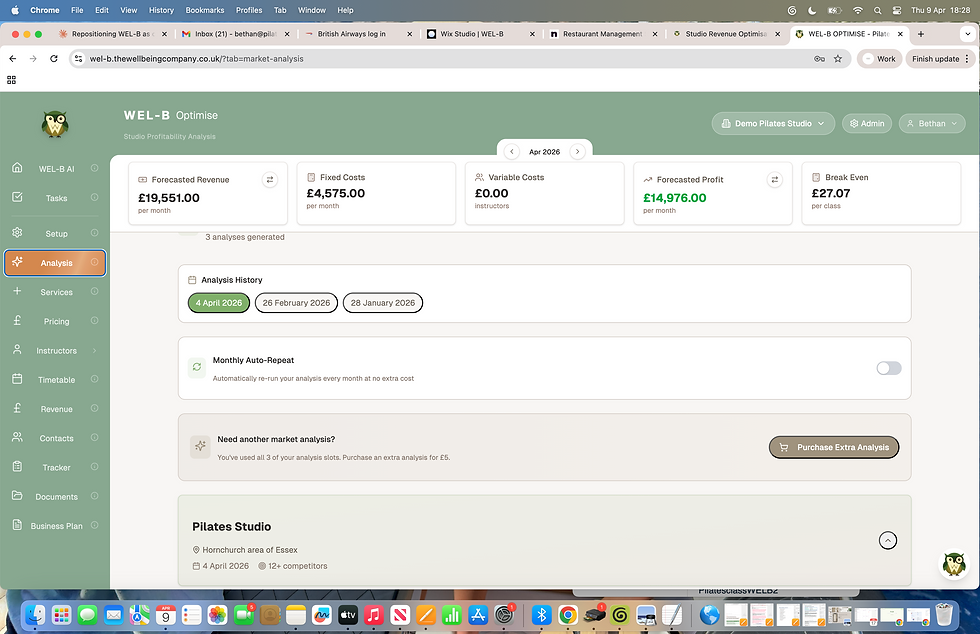
Create accurate financial projections for your studio
Track your actual spending against your budget in real time
Identify which pricing models work best for your location
Make data-driven decisions about when to expand
Spot potential cash flow issues before they become problems
With WEL-B you can launch your studio with confidence knowing you have the financial insights to support every decision.
Your Studio’s Financial Future Starts Here
Opening a Pilates studio is absolutely achievable when you go in with your eyes open and the right tools at your disposal. While there are costs involved, the potential rewards of building a successful studio far outweigh the challenges.
The studios that thrive in 2026 are those that combine their passion for Pilates with smart financial planning. With WEL-B’s financial intelligence platform you can:
Model different financial scenarios before you commit
Track your progress in real time as you launch
Make adjustments based on actual data
Book a call below and take the first step toward launching your successful Pilates studio.


Comments